Last Known Address
From the Walt Whitman Collection
***
From the Alfred Stieglitz / Georgia O’Keeffe Archive (from Lenore Tawney)
***
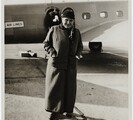
From the Gertrude Stein and Alice B. Toklas Papers (from Picasso)
***
From the Katherine S. Dreier Papers / Societe Anonyme Papers (from Kurt Schwitters)
***
From the Ezra Pound Papers (from T.S. Eliot)
New from Beinecke Collections

In the 1950s, Yale University Press published a number of Gertrude Stein’s posthumous works, among them her incomparable Stanzas in Meditation. Since that time, scholars have discovered that Stein’s poem exists in several versions: a manuscript that Stein wrote and two typescripts that her partner Alice B. Toklas prepared. Toklas’ work on the second typescript changed the poem when, enraged upon detecting in it references to a former lover, she not only adjusted the typescript but insisted that Stein make revisions in the original manuscript.
This edition of Stanzas in Meditation is the first to confront the complicated story of its composition and revision. Through meticulous archival work, the editors present a reliable reading text of Stein’s original manuscript, as well as an appendix with the textual variants among the poem’s several versions. This record of Stein’s multi-layered revisions enables readers to engage more fully with the author’s radically experimental poem and also to detect the literary impact of Stein’s relationship with Toklas. The editors’ preface and poet Joan Retallack’s introduction offer insight into the complexities of reading Stein’s poetry and the innovative modes of reading that her works require and generate.
Students and admirers of Stein will welcome this illuminating new contribution to Stein’s oeuvre.
Order from Yale UP: Stanzas in Meditation
Janes
Photographs of women named Jane in the Yale Collection of American Literature
***
Jane Bowles, photographed by Carl Van Vechten, 1951
***
Jane Heap, photographed in Paris by Berenice Abbott, 1927
***
Jane White, photographed by Carl Van Vechten, 1941
***
Jane DeLynn, photographed by Robert Giard, 1991

***
Photographs by Carl Van Vechten are used with permission of the Van Vechten Trust; permission of the Trust is required to publish Van Vechten photographs in any format.
Photographs by Robert Giard are used with permission of the copyright holder, Jonathan G. Silin; permission is required to publish Giard photographs in any format.
The Ends of the Book
PSNH: The Ends of the Book: Authors, Readers, Public Spaces A lecture by Matthew Stadler, founder of Publication Studio, on the occasion of Publication Studio New Haven, a one-week project hosted by Beinecke Library and ArtSpace New Haven. Followed by an interview with project coordinator, Timothy Young and an audience Q&A.
New Year’s Greetings
Miguel Covarrubias, Hand painted New Year’s card sent to Carl Van Vechten (Portrait of Rose and Miguel Covarrubias), 1946. From the Carl Van Vechten Papers.
New from the Beinecke Collections: IDA
Ida: A Novel
a new edition, edited by Logan Esdale; published by Yale University Press

Gertrude Stein wanted Ida to be known in two ways: as a novel about a woman in the age of celebrity culture and as a text with its own story to tell. With the publication of this workshop edition of Ida, we have the novel exactly as it was published in 1941, and we also have the full record of its creation. Logan Esdale offers informative critical commentary and judiciously selected archival materials to illuminate Stein’s experience of authorship from the novel’s beginning in early summer 1937, through the various drafts and negotiations with her publisher, to the reviews that greeted the book’s publication. Stein’s careful and systematic preservation of all Ida-related materials for her archive at the Yale University Library was a conscious decision, and an invitation for us to study the complexity of her creative process.
Gertrude Stein (1874–1946) was born in Allegheny, PA, of German-Jewish immigrants. She moved to Paris in 1903 and lived in France for the rest of her life. She published Ida: A Novel in 1941, eight years after she became famous for her best-selling Autobiography of Alice B. Toklas. Logan Esdale teaches at California State University, Long Beach.
Beinecke Collections: Gertrude Stein and Alice B. Toklas Papers Finding Aid (YCAL MSS 76); Gertrude Stein and Alice B. Toklas Papers Image Guide
REBINDING BLOW-OUT

REBINDING PARTY
Saturday, November 19 from 12:00 – 5:00:
“Five Buck Book Binding Blow-Out!”
Bring in your old, falling-apart paperbacks or a book whose cover doesn’t suit you, and get it rebound into a sturdy manila bound edition. $5/rebind.
at PSNH Pop-Up Shop
196 College Street, New Haven, CT 06510
***
Publication Studio comes to the Elm City to redefine the social life of the book
A One-week Residency in the Coop Center for Creativity
November 14 – 19, 2011
MORE Information: PSNH

TODAY @ PSNH

THURSDAY at PSNH
(196 College Street, New Haven, CT 06510)
POP-UP SHOP OPEN HOURS
11:00 – 6:00
PUBLICATION DEMONSTRATION
(refreshments served)
1:00 – 2:00
PSNH PUBLIC LECTURE
Matthew Stadler, founder of Publication Studio
“The Ends of the Book: Authors, Readers, Public Spaces”
Thursday, November 17, 4:00 – 5:30.
Location: Beinecke Rare Book and Manuscript Library,
121 Wall Street, New Haven, CT
Free and open to the public
***
Publication Studio comes to the Elm City to redefine the social life of the book
A One-week Residency in the Coop Center for Creativity
November 14 – 19, 2011
MORE Information: PSNH

Today at PSNH

WEDNESDAY at PSNH
(196 College Street, New Haven, CT 06510)
POP-UP SHOP OPEN HOURS
11:00 – 6:00
PUBLICATION DEMONSTRATION
(refreshments served)
5:00 – 6:00
Matthew Stadler discusses Print on Demand, Literature, and the World
using 20 images shown for 20 seconds each
6:30pm at Bentara
Bentara is on Orange Street between Chapel and Crown, in downtown New Haven.
***
Publication Studio comes to the Elm City to redefine the social life of the book
A One-week Residency in the Coop Center for Creativity
November 14 – 19, 2011
MORE Information: PSNH

Publication Studio New Haven

Publication Studio comes to the Elm City to redefine the social life of the book.
A One-week Residency in the Coop Center for Creativity
November 14 – 19, 2011
Publication Studio, founded in Portland, Oregon in 2009, is an experiment in sustainable publication that has branched into six independent sibling studios around North America. They print and bind on demand, creating original books quickly with writers and artists they admire. They attend to the social life of the book, cultivating a public that cares and
is engaged.

SCHEDULE OF EVENTS
POP-UP SHOP
196 College Street, New Haven, CT
Hours: 11:00 – 6:00 MTWTF (NOV 14-18); 12-5 SAT (NOV 19)
Demonstrations (open to the public)(refreshments served)
MONDAY, NOV 14 5:00 – 6:00
TUESDAY, NOV 15 5:00 – 6:00
WEDNESDAY, NOV 16 5:00 – 6:00
THURSDAY, NOV 17 1:00 – 2:00
FRIDAY, NOV 18 12:00 – 1:00
Rebinding Party
SATURDAY, NOV 19 12:00 – 5:00
“Five Buck Book Binding Blow-Out”!
Bring in your old, falling-apart paperbacks
or a book whose cover doesn’t suit you,
and get it rebound into a sturdy manila
bound edition. $5/rebind.
PUBLIC LECTURES
Matthew Stadler, founder of Publication Studio
“The Ends of the Book: Authors, Readers, Public Spaces”
Thursday, November 17, 4:00 – 5:30.
Location: Beinecke Rare Book and Manuscript Library,
121 Wall Street, New Haven, CT
Free and open to the public
Diana Balmori, internationally renowned landscape and
urban designer, speaking at the launch of Publication
Studio’s facsimile edition of her Moleskin Diaries.
Friday, November 18: 6:00 – 7:30
Location: 196 College Street, New Haven, CT
Free and open to the public.
Seating is limited, so please arrive early.

Co-sponsored by ArtSpace New Haven and
the Beinecke Rare Book and Manuscript Library
in conjunction with the ArtSpace exhibition
“Library Science”.
Exorcism
The Beinecke Rare Book and Manuscript Library at Yale University has acquired Eugene O’Neill’s “lost” one-act play, “Exorcism” (1919). The play, along with a facsimile of the typescript, will be published in a cloth edition by Yale University Press in February 2012, featuring an introduction by the noted American playwright Edward Albee. The New Yorker has acquired first serial rights and will publish the play in its entirety, with an introduction by theater critic John Lahr, in the magazine’s Fall Books issue, October 17, 2011 (on newsstands October 10). A short video of the actor Tommy Schrider reading from “Exorcism” will be featured onThe New Yorker’s website and iPad application: http://www.newyorker.com/online/blogs/books/2011/10/eugene-oneill-exorcism-reading.html .
“Exorcism,” set in 1912, is based on O’Neill’s suicide attempt from an overdose of veronal in a squalid, Manhattan rooming house. The play premiered at the Provincetown Playhouse in New York City on March 26, 1920. Following a few performances, however, O’Neill chose, abruptly, to cancel the production and to retract and destroy all known copies of the script. O’Neill biographers have speculated that the play, produced as O’Neill’s father was dying, was perhaps too revealing of O’Neill’s own demons and potentially distressing for his parents.
Despite long-held presumptions that the play was irrevocably lost, O’Neill’s second wife, Agnes Boulton, apparently retained a copy of the play, which she gave as a Christmas gift to the writer Philip Yordan after her divorce from O’Neill. Yordan is perhaps best known for his O’Neill-inspired play, and later film, Anna Lucasta, starring an all-black cast. The typescript, with edits and emendations in O’Neill’s own hand, was discovered by a researcher working in Yordan’s papers, together with the original envelope; the label is inscribed, “Something you said you’d like to have / Agnes & Mac” (Morris “Mac” Kaufman was Boulton’s third husband).
O’Neill, a four-time Pulitzer Prize winner and the only American playwright to receive the Nobel Prize for literature (1936), returned to many of the issues that surface in “Exorcism” in his heavily autobiographical play Long Day’s Journey into Night, published posthumously in 1956 and considered to be his masterpiece. The discovery of “Exorcism,” after ninety years, adds significantly to O’Neill’s biography, intimating the overwhelming role that suicide would take in his personal life along with the issue’s influence and impact on his work. The play also marks a pivotal moment in O’Neill’s prolific career, providing further insight into the later works for which he is now revered.
The Beinecke Rare Book and Manuscript Library is the principal repository for the Eugene O’Neill Papers. A detailed description of the papers is available online:Eugene O’Neill Papers Finding Aid (YCAL MSS 123). Some materials from the collection can be viewed online: Eugene O’Neill Papers Image Guide. Related materials and collections may be located using the Beiencke Library’s various research tools: Guide to Research Tools.
For inquiries about the play, or the Eugene O’Neill Papers, please contact Louise Bernard (louise.bernard@yale.edu<mailto:louise.bernard@yale.edu>), Curator of the Yale Collection of American Literature for Prose and Drama, Beinecke Rare Book and Manuscript Library.
For inquiries about the play’s publication in book form this February, please contact Brenda King (brenda.king@yale.edu<https://connect.yale.edu/owa/redir.aspx?C=73c3409735984d659ba72031b6fc15e7&URL=mailto%3abrenda.king%40yale.edu>), Publicity Director, Yale University Press.
Image: Photograph of Eugene O’Neill, inscribed to his son [1927].
How are Multitides?
EXHIBITION CLOSING PARTY
How is a Book?
and
Multitudes: A Celebration of the Yale Collection of American Literature, 1911 – 2011
Friday, September 23, 2011 at 5:00
More about Multitudes and How is a Book
Beinecke Rare Book & Manuscript Library
Yale University, 121 Wall Street, New Haven
Free and open to the public
Image: [Crowd gathered for a tug-of-war competition at the University of Montana, Missoula], [1911-12]
Window Picture
Research in Beinecke Library Collections:
Photographic Memory Workshop – Graduate Student Working Group 2011-2012
The Photographic Memory Workshop is pleased to invite graduate students, post-doctoral students and academic fellows of the Yale community to submit presentation proposals to its 2011-2012 Graduate Student Working Group. In addition to our usual calendar of visiting scholar lectures, our workshop series offers members of the Yale community working on photography an opportunity to present and discuss works in progress.
Our aim is to bring together people from a variety of disciplines to give feedback and to inspire productive critical conversation about the visual material.
At each meeting, the speaker will give a 20-30 minute informal presentation centered on a set of photographs, instruments, or materials. These presentations can be formal papers, works in progress, or curatorial projects. Electronic images of the subject being presented (but not the text of the presentation itself) will be pre-circulated to the group by email prior to each meeting. The presentation will be followed by critical conversation and feedback about the speaker’s research project/paper/exhibition.
We are open to any submission related to photography. This includes, but is not limited to, photography’s material processes and cultural history, scientific and applied photography, photographs in books, as well as conceptual, fine-art, and commercial photography. We especially welcome proposals relating to objects in any of the Yale University collections.
Photographic Memory Workshop Meetings:
The Workshop meets several times throughout the semester, generally at 6pm on Wednesdays. Specific dates and time TBA–contact the organizers for details or to receive announcements about meetings and related events.
Submission Guidelines:
Please send a 250-500 word proposal along with a selection of images relating to your research topic by October 1st, 2011 to photographicmemoryworkshop@gmail.com.
About the Photographic Memory Workshop:
This is the thirteenth year of the Photographic Memory Workshop under the mentorship of Professor Laura Wexler. The workshop, which brings together graduate students, faculty, and staff from a wide variety of disciplines, explores the myriad of possibilities inherent in the study of photographs and/or memory. Should you have any questions about the workshop or our activities, please email photographicmemoryworkshop@gmail.com or contact the graduate student fellows at heidi.knoblauch@yale.edu and audrey.sands@yale.edu.
About Photography in the American Literature and Modern Books and Manuscripts Collections:
Photographic materials in the Collections compliment the book and manuscript collections, with a close relationship to archival materials and other primary documentation. Holdings in the collections document the lives of writers and literary communities, cultural spaces, and significant events of various kinds and include everything from snapshots and passport photographs to fine art and portrait photography by some of the most important photographers of the 20th century. Materials in the Modern Books and Manuscripts Collection are primarily from Europe and Africa; photographic materials in the Yale Collection of American Literature document the lives and work of Americans at home and abroad. Brief overviews of the Collections can be found online: Photography in the Modern Books and Manuscripts Collection: http://photostest.odai.yale.edu/directory/dir_single_collection.php?collection_id=14; Photography in the Yale Collection of American Literature: http://photostest.odai.yale.edu/directory.
About Photography in Yale Collections:
A Directory of Yale Photographic Collections provides a portal through which to mine the breadth of the University’s images across repositories and disciplines. The interdisciplinary nature of these resources opens the possibility for endless discoveries of images illustrating sweeping applications of the medium and at the same time presents exciting avenues for the creative use of photographs in object-based learning. http://photostest.odai.yale.edu/directory/index.php
Image:
Jonathan Williams, [Polaroid photo of cat in window], undated. By Permission of Jargon Books/Jonathan Williams Estate.
Jewel Box
“America’s Finest Femme- Mimics” publicity fan from the Jewel Box Lounge, The Most Talked About Nite Club in the Midwest (Kansas City, MO, undated).
The archival component of the Laura Bailey Collection of Gender and Transgender Materials (GEN MSS 787) is now available for research. One of the largest and most diverse collections of its kind, the Laura Bailey Collection of Gender and Transgender Materials consists of a broad range of printed and visual materials, including photographs, postcards, and many types of printed ephemera; manuscript materials, and audiovisual materials. The collection is organized largely as it was received from Bailey, with many materials in binders according to category of gender or transgender culture or performance as assigned by Bailey. Also included is a catalog for the collection compiled by Bailey and the hand-written index cards she used to catalog it. A primary description of the contents of the archival component of the collection is available online here: http://hdl.handle.net/10079/fa/beinecke.lbailey. Cataloging and description of the printed material is ongoing.
Day at the Beach
Lawrence Langner, Fania Marinoff (Mrs. Carl Van Vechten), Eugene O’Neill , Armina Marshall (Mrs. Langner) (ZA Van Vechten)
***
Stieglitz family (YCAL MSS 85)
***
Natalie Paley (GEN MSS 574)
***
[Photograph of Anne [Gathorne-Hardy], Ruth [Gathorne-Hardy?], John Spencer Churchill, and unidentified woman on the beach near Snape] (GEN MSS 476)
***
[Photograph of Meschrabpom's American Film Group on the beach] (JWJ MSS 26)
***
[Photograph of Henry Geldzahler and Marty Edelheit on the beach]. (UNCAT MSS 30)
***
Gerald and Sara Murphy (UNCAT MSS 101)


leave a comment